
US President Donald Trump has acknowledged that the war he launched against Iran was partly responsible for his Republican Party’s sweeping losses in the midterm elections, as analysts warn that he faces increasingly difficult choices over whether to escalate the conflict or pursue a diplomatic settlement.
Trump’s political position has weakened after Democrats secured control of both the Senate and the House of Representatives in Tuesday’s elections.
The US president remains caught between his stated desire to end the war with Iran through diplomacy, which has driven up gasoline prices for American consumers, and his repeated threats to intensify military operations against Tehran.
“Trump is now in a bind: Escalation offers no clear path to victory and risks further wrecking his presidency, while diplomacy offers a potential way out,” said Sina Toosi, a senior non-resident fellow at the Center for International Policy.
Toosi told AFP that the new Democratic-controlled Congress would also have significant oversight and funding powers starting in January, further limiting Trump’s options.
On Wednesday, Trump acknowledged that it was “largely true” that the conflict with Iran and the resulting rise in fuel prices had contributed to the Republicans’ major electoral defeat.
However, he maintained that he would make the same decision again, despite the party’s poor performance at the polls.
Vice President JD Vance, who is considered a potential Republican contender in the 2028 presidential election, was more direct in assessing the reasons for the defeat.
“The reason we lost is the war. The president himself said so last night,” Vance wrote in a post on X.
Economic concerns and the Iran war weigh on voters
Many American voters cited rising living costs and the war with Iran as major factors behind their voting decisions.
Charles Hall, executive director of the North Carolina Soybean Producers Association, told AFP that soaring energy costs had created widespread frustration among traditionally reliable Republican voters, including farmers.
Hall, who also voted in North Carolina, pointed to significant shifts toward Democrats in the state, saying the results suggested voters were casting ballots against the policies they opposed.
“If they’re farmers, they’re probably voting against high diesel prices,” he said.
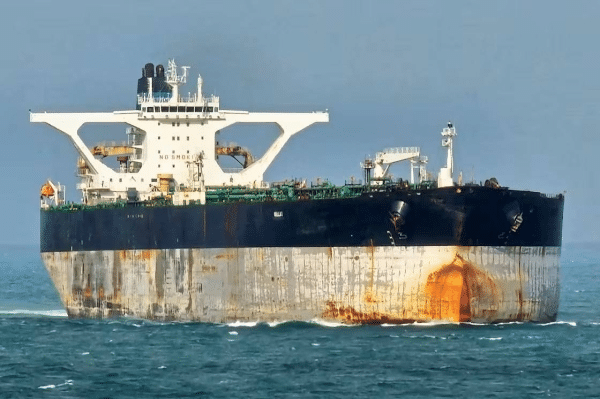
Iran retaliated against US and Israeli strikes launched against it in late February by blocking the Strait of Hormuz, a vital passage for global energy shipments, sending oil prices sharply higher.
However, James Lindsay, a senior fellow at the Council on Foreign Relations, argued that the Republicans’ historic election defeat was driven by factors extending well beyond the war with Iran.
He described the Democratic gains as a “blue tsunami” reflecting voters’ rejection of much of Trump’s political agenda.
Trump won the 2024 presidential election promising to make life more affordable, but Lindsay said many Americans now believe their financial situation has deteriorated.
“The Iran war clearly played into that by driving up the price of gas and diesel,” he told AFP.
Lindsay added that Trump had frequently behaved in ways that suggested he was indifferent to the economic hardships and suffering experienced by Americans.
Toosi said the message from voters was clear: They wanted relief from the economic costs of the war, not an escalation of the conflict.
Democrats call for an end to the war
Top Senate Democrat Chuck Schumer said Wednesday that the war with Iran “must end,” while Hakeem Jeffries, who is expected to become House speaker, expressed a similar position.
It remains uncertain whether Trump will respond to voters’ concerns by seeking a swift end to the conflict or continue pursuing military action.
Lindsay said that, even apart from the election results, escalating the confrontation with Iran had always been a risky strategy.
He warned that another round of intense attacks, even if intended to be short-lived, could provoke Iranian retaliation against facilities across the Gulf, potentially causing the conflict to spiral out of control.
At the same time, Trump’s alternatives are also limited. Maintaining the US naval blockade in the Middle East is placing additional strain on American military resources, while diplomatic negotiations have so far failed to produce significant progress.
“The president’s in a difficult position regardless,” Lindsay said.
He added that if Vance’s criticism reflects the views of other Republican lawmakers, Trump could face additional political risks if he decides to intensify the war against Iran.