


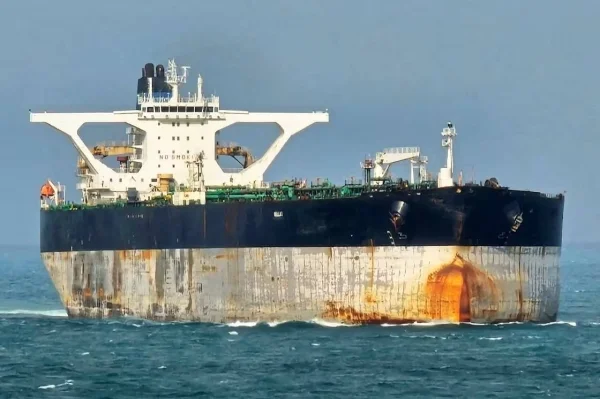
Moscow said Thursday that Russian diesel shipments bound for the United States were still on track, after vessel-tracking data indicated that two of the three tankers appeared to have changed course and were heading toward other destinations.
US President Donald Trump eased sanctions on Russian oil last month as part of an agreement with Russian President Vladimir Putin to supply hundreds of thousands of tons of diesel directly to the United States.
The deal sparked an uproar in Ukraine and across Europe.
The Financial Times reported Wednesday that two of the three tankers, which departed from the Russian port of Primorsk in mid-October, appeared to have changed their destinations and were no longer heading to the United States.
Kirill Dmitriev, a Kremlin envoy and negotiator, dismissed the report as “fake” in a post on X, insisting that tankers destined for the United States were continuing along their planned routes.
Two Tankers Appear to Have Changed Course
According to data from maritime tracking platform MarineTraffic reviewed by AFP, one of the tankers, the sanctioned Talisman, was sailing off the coast of Tunisia on Thursday.
After passing through the English Channel on October 29, the vessel turned south, sailing past the Bay of Biscay and the Portuguese coast before entering the Mediterranean Sea through the Strait of Gibraltar on Monday.
Under its original route, reviewed by AFP last week, the tanker had been scheduled to arrive on the US East Coast on November 9.
However, data from analytics firm Kpler showed that the vessel no longer listed a destination port and was carrying approximately 324,000 barrels of diesel.
The second tanker, Leruo, listed Brazil as its destination on Thursday as it sailed southwest across the Atlantic.
Meanwhile, the third vessel, Agioi Fanendes, continued to list New York as its destination and was scheduled to dock there on Saturday, according to Kpler data.
Kremlin Says Shipment Details Are Commercial Matters
Asked about the reports, Kremlin spokesman Dmitry Peskov said details of the shipments were a “commercial” matter that could not be made public.
“All diesel will find its buyers,” he added.