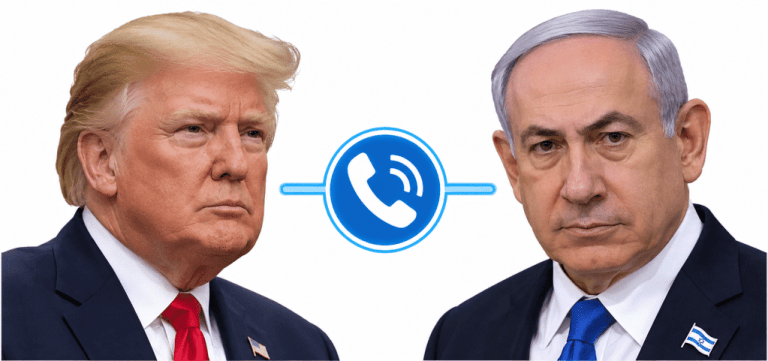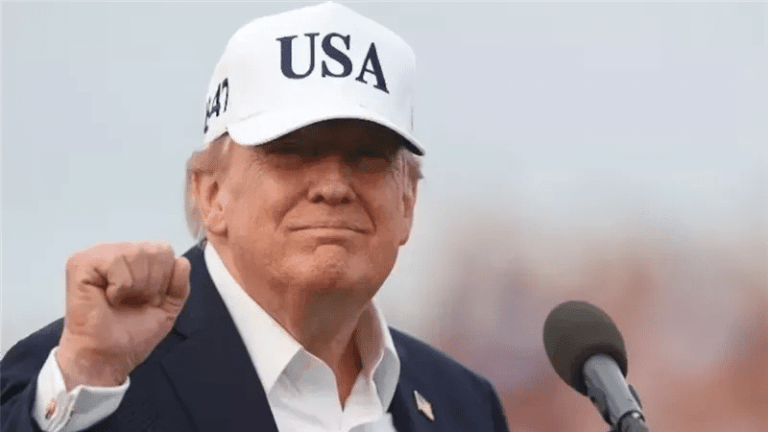

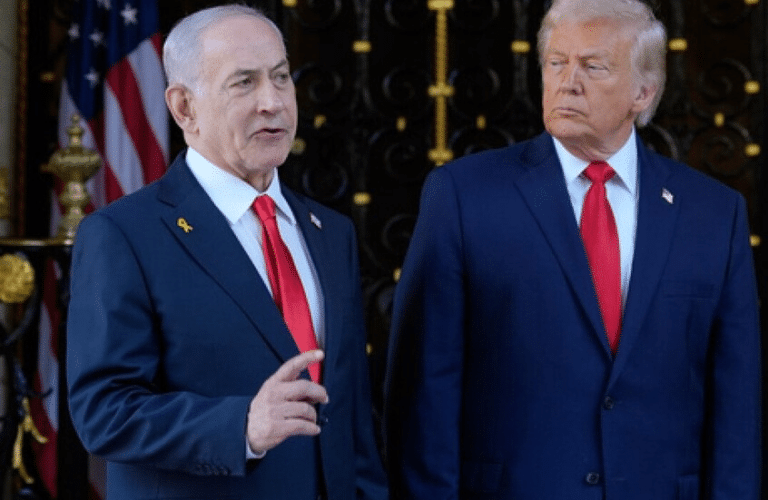
US President Donald Trump held a phone call with Israeli Prime Minister Benjamin Netanyahu to discuss whether and when to escalate military operations against Iran, US media reported Sunday.
Axios, citing one US and one Israeli official, reported that the two leaders discussed the status of negotiations with Tehran on Saturday. Netanyahu reportedly urged Trump to launch strikes against Iran immediately after the US midterm elections, while the American president favored allowing diplomatic efforts to continue.
The Israeli official described the conversation as “tough,” while the US official characterized it as “direct,” according to Axios.
Trump later confirmed on Sunday that he had spoken with Netanyahu the previous day.
“Just had a very good talk with him,” Trump said, adding that Iran was among the topics discussed.
Throughout the eight-month conflict, Trump has pursued a dual-track approach toward Tehran, combining airstrikes and other military operations with efforts to reach an agreement that could revive peace negotiations and fully reopen the Strait of Hormuz to vital oil and gas shipments.
Speaking to reporters on Saturday, Trump said negotiations with Iran to end the war were “going fine,” while noting that there were still one or two targets to “take care” of.
He also stressed that Washington was in no hurry to launch further offensive operations, arguing that US strikes had already severely weakened Iran’s military capabilities and nuclear program.
The Trump-Netanyahu conversation came after Iranian security chief Mohsen Rezaei disclosed on Saturday that he had received a letter from US Vice President JD Vance aimed at reviving stalled negotiations.
In another indication that mediators are seeking to restart diplomatic efforts, a Qatari delegation arrived in Tehran on Friday for talks with Iranian officials, according to Iranian state media.
Meanwhile, Trump is facing mounting domestic political pressure over the war in the Middle East, as American voters express growing frustration with rising gasoline prices and the broader cost of living. The economic concerns could influence voters’ decisions in the upcoming US midterm elections.