
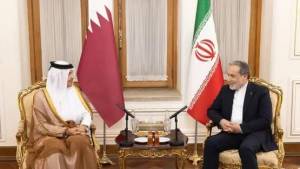
Qatar’s Prime Minister and Foreign Minister Sheikh Mohammed bin Abdulrahman Al Thani traveled to Tehran on Thursday in an effort to revive diplomatic efforts between the United States and Iran, as tensions rise over Washington’s plans to intensify economic pressure on Tehran.
Qatar, which maintains close ties with both Iran and the United States, has played a key role as a back-channel mediator between the two sides. Doha also helped facilitate a ceasefire in June that temporarily brought an end to direct hostilities.
Iran’s Foreign Ministry said Al Thani met with Iranian Foreign Minister Abbas Araghchi during his visit to Tehran.
The visit comes as the conflict approaches its sixth month. Although fighting has largely subsided, no major diplomatic breakthrough has been reached, while Washington and Tehran remain divided over the future of the Strait of Hormuz, a critical global energy shipping route.
Temporary Shipping Corridor Proposed
Qatar’s Foreign Ministry said the discussions included a proposed phased framework that would establish a temporary joint Iranian-Omani shipping corridor through the Strait of Hormuz.
The proposal would also include a joint project between Iran and Oman to clear mines from the waterway, with the aim of improving maritime safety and facilitating the gradual restoration of shipping traffic.
The two sides also discussed regional developments, efforts to reduce tensions and the conditions needed to resume diplomatic dialogue.
The Strait of Hormuz has become one of the central points of disagreement between Washington and Tehran. A memorandum of understanding reached by the two countries in June collapsed partly because of disputes over the narrow waterway separating Iran and Oman.
Before the war began on February 28, roughly one-fifth of global oil supplies passed through the strait.
Iran Condemns Growing Economic Pressure
While direct military operations have largely halted, the United States has intensified economic pressure on Iran, announcing additional sanctions aimed at restricting Tehran’s trade and financial links with international partners.
Iranian Parliament Speaker Mohammad Baqer Ghalibaf described the escalating pressure as an “all-out economic war” and called for national unity, warning that internal divisions would serve Iran’s adversaries.
Ebrahim Azizi, chairman of the Iranian Parliament’s National Security Committee, described the new sanctions as an “inhumane and hostile act,” while arguing that years of sanctions had failed to achieve their intended objectives.
Iran has faced various forms of US sanctions since the Islamic Revolution in 1979.
Oil Shipments Through Hormuz Decline
Oil shipments through the Strait of Hormuz have fallen sharply amid the ongoing tensions. The latest vessel-tracking data showed that around 5 million barrels per day passed through the waterway on Monday, the lowest level in roughly three months.
Before the conflict, the strait handled approximately 20 million barrels of crude oil per day, making any prolonged disruption a major concern for global energy markets.
Oil prices rose again on Thursday as investors assessed the prospects for reopening the waterway. Brent crude futures gained around 0.6% to $88.35 a barrel, reflecting continued uncertainty over the future of shipping through the strategic strait.