


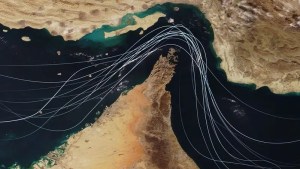
Preliminary data showed that only nine ships transited the Strait of Hormuz on Thursday, down from 14 vessels the previous day and well below the average of around 18 ships recorded over the preceding 10 days.
Eight vessels exited the strait, while only one entered it. The figures may not reflect the full volume of maritime traffic, as some vessels can navigate the waterways with their automatic identification systems switched off and therefore remain absent from tracking data.
Among the vessels that exited Hormuz were a large gas carrier sailing without cargo and a loaded very large crude carrier. The vessel entering the strait was a dry bulk carrier.
Bab el-Mandeb Traffic
Traffic through the Bab el-Mandeb Strait remained relatively stable compared with the previous day, with 26 vessels recorded crossing the strategic waterway. Twelve ships entered the strait, while 14 departed.
The vessels entering included a loaded very large crude carrier carrying Iraqi Basra crude and bound for Egypt, with its automatic identification system switched on.
Hormuz’s Importance to Global Energy Markets
Before the outbreak of the war between Iran and the United States and Israel on February 28, the Strait of Hormuz handled around 125 large commercial vessels per day, including oil and gas tankers, bulk carriers and container ships.
At that time, maritime traffic through the strait accounted for roughly 20% of global daily crude oil and liquefied natural gas supplies, making any disruption to shipping through the waterway potentially significant for global energy markets and supply chains.


