


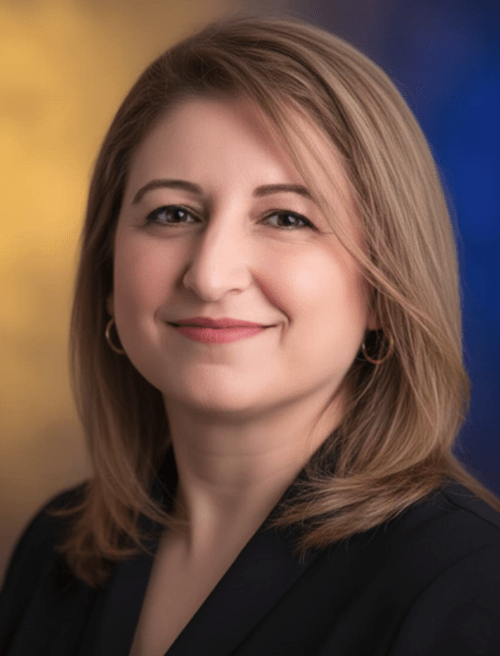
Interview by: Elham Issa
Who is Jenna Mohamed Ghoneim? How would you introduce yourself to readers and followers?
My name is Jannah Mohamed Ghoneim. I am nineteen years old, from Cairo—a city where I was born and where I have lived every detail of my life. I study at the Faculty of Home Economics at Helwan University, majoring in Institutional Management and Building & Interior Design. However, my true passion has always been writing.
I am a poet. I began writing poetry in the form of reflective prose and expressive thoughts when I was just eight years old. Later, my awareness deepened through the works of poets such as Amal Dunqul, Farouk Shousha, Abdel Rahman El-Abnudi, Salah Jahin, and other modern writers who inspired me to read and immerse myself in the world of words.
At the age of seventeen, I became increasingly drawn to novels, which helped me discover myself. In them, I found a wider space to express my ideas, emotions, and the questions that have always accompanied me. I believe that a novel is not merely a story to be told, but a world we turn to in order to understand ourselves.
I write to express what cannot easily be said, and to create from imagination a space that resembles me. That is why I have been inspired by women’s literature—adding thoughts that reflect who I am, engaging with them in an ongoing inner dialogue, where I shape them, and they, in turn, shape me
How did your journey in the world of writing begin? And who supported you on this thousand-mile journey?
Writing began for me as an inner necessity before it was ever a conscious choice. I wrote first to understand myself, and then I discovered that what I was writing echoed the questions of others as well.
My first source of support was my passion for reading, along with those writers whom I came to regard as the guiding voices of my thoughts. My father and mother also believed in my talent and encouraged me to keep going. There was another kind of support too—my own determination not to stop.
I have participated in several workshops and attended many discussions of novels and poetry collections by contemporary writers and poets, held in cultural centers and book fairs. From them, I draw inspiration that motivates me to continue, and I learn from their experiences and from the lessons life itself has to offer.
Which writers and novelists do you read? Who influenced you and why?
I read authors and writers who have deeply influenced me, such as Dr. Youssef Idris, Anis Mansour, Ahlam Mosteghanemi, and Waciny Laredj, among others with whom I have shared worlds of thought. They gifted me the lantern I carried into the beginnings of my own work.
I am drawn to literature that delves into the depths of the human soul and explores inner conflicts. I have been shaped by every writer who can make the reader see themselves between the lines and feel that each word holds a deeper meaning.
I believe that true literature raises questions more than it provides answers, leaving space for the reader to discover themselves.
Jannah Ghanem Khanzab Al-Aasheq, the first novel written by your pen, how did you choose the title and what did your title carry within it?
would be both compelling and meaningful—one that carries depth and significance. I consulted my father, and after reading the early ideas of the novel, he was the one who suggested the name Khanzab. He introduced me to the notion of the Khanzab clan, explaining that it is not merely the name of a single figure, but of an entire lineage with a deep and extensive history—one that teaches us and extends far beyond a single identity.
I was drawn to the name because of this richness. It sparks the reader’s curiosity and suggests that behind every word lies a story. The title itself opens the door to a world filled with mystery and complex emotions, inviting the reader to embark on the journey of the novel from the very first moment.
The novel blends many elements from reality with others drawn from my imagination. I sought to explore deeply and search further in order to convey a message to the reader: that one should not delve into what does not concern them, and that some unknowns are better left unexplored.
In this way, I wanted the novel to be more than just a story—it is both a cautionary and intellectual experience, bringing together mystery and a deep reflection on the human and what lies beneath the surface
Does the emptiness a person lives with drive them into another world of the unknown? In your opinion, is humanity today living in a state of emptiness?
Yes, I believe that inner emptiness is one of the most dangerous things facing modern people. When a person loses their sense of meaning, they begin searching for it in places that may be dark or dangerous. Emptiness is not the absence of things, but the absence of meaning—and that is what I tried to explore in the novel.
In the first chapter of your novel, you wrote that silence turns into a language. How do you see that?
Silence is not always emptiness; sometimes it is more truthful than words. There are feelings and thoughts that language cannot carry, so silence becomes another kind of language—a language that says what words are unable to express.
Jannah wrote: “Life carries secrets that are known only to those who dare to cross the red lines.

What did you want to place in the reader’s hands through this phrase?
I wanted to say that true knowledge is never easy, and that reaching certain truths requires courage—but it is a courage surrounded by danger. Not everything we seek is meant for us, and not everything we discover brings us peace
“Perceiving what lies beyond the veils becomes, the more it is surrounded by dread, like an irresistible dark attraction that pulls hungry minds toward an abyss from which there is no return. So what does a person find when they break through that barrier? Is it the light of truth, or the night of eternal madness?” This is one of the ideas expressed in your novel Khanzab the Lover. What would you like to convey to the reader?
This question is the very heart of the novel. Sometimes a person discovers the truth, and sometimes they lose themselves in the search for it. I wanted to place the reader before this open question: Is knowledge always a blessing? Or can it sometimes become a curse?
The character of Isabelle, the heroine of the novel, appears to be an educated woman studying medicine, yet she becomes influenced by an article she reads and begins searching for the unknown. In your opinion, does this kind of person exist in reality, or is she purely a creation of imagination?
Isabelle is not entirely fictional, nor entirely real—she is a blend of both. There are many people in reality who resemble her: educated, rational, yet driven by curiosity into places they never expected to reach. So in that sense, she is a character who could very much exist in real life.
Do you think that the gap between children and their parents creates a sense of emptiness and contributes to their trying to fill that void with things that may be harmful—especially as we saw in your novel, through the mother’s absence from the home and Isabelle being left alone to struggle with her dream?
Without a doubt, the distance between children and their parents can create an emotional and psychological emptiness that sometimes drives a person to fill that void in places or experiences that may be harmful.
I never mentioned Isabelle’s father by name, to emphasize his absence. Her mother was close to her, but not in the way Isabelle truly needed. She tried to protect her, yet the demons of the mind are often stronger.
Sometimes the reason lies in the family, and sometimes it is simply a wrong way of thinking that pushes us toward things we should not do. All of this shaped Isabelle’s inner conflict and the choices she made, showing how deeply emptiness can leave its mark on the soul.
Are the characters and heroes of your novel drawn from reality or from imagination? And where do we find Jannah within these characters?
The characters in the novel are a blend of reality and imagination. Some of them carry traces of real people, while others were born entirely from fiction.
As for Jannah, a part of her exists in every character: in Isabelle’s fear, in her questions, in her rebellion, and in her desire to understand what lies beneath the surface.


