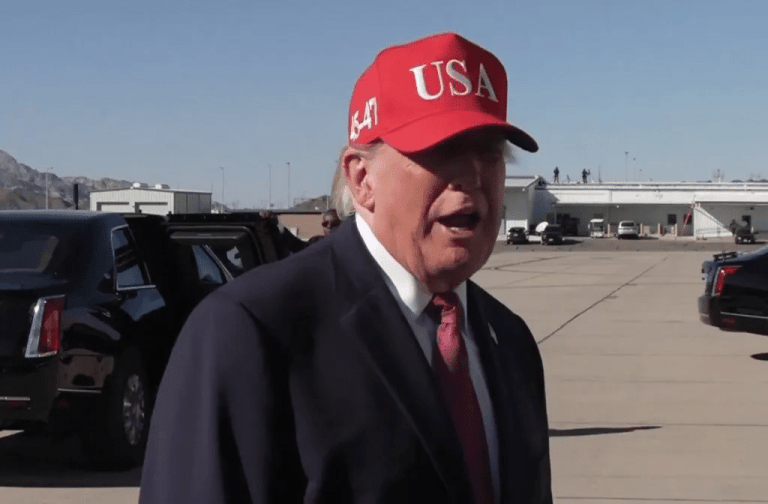

U.S. President Donald Trump said Monday evening that the United States is “hitting the Iranians hard” and doing a good job, adding that Washington will continue to monitor developments and assess how the situation unfolds in the coming period.
Trump stressed that Iran “can never have a nuclear weapon,” describing it as a “failed state,” while making clear that this does not mean the United States will stop carrying out strikes against Iranian targets.
Regarding the Strait of Hormuz, Trump described the situation there as “very good,” saying that around 30 ships pass through the strait each day and that vessels are leaving the waterway under the protection of the U.S. military.
He added that oil continues to flow through the Strait of Hormuz, arguing that the continued movement of oil and commercial shipping has helped prevent oil prices from rising further.
Trump also claimed that Iranians do not know who their leader is and said that Iranian authorities are not paying the salaries of their soldiers. “Nobody knows who the leader in Iran is,” he said.
The U.S. president further said that Chinese President Xi Jinping had taken a “neutral” position regarding the situation in the Strait of Hormuz.
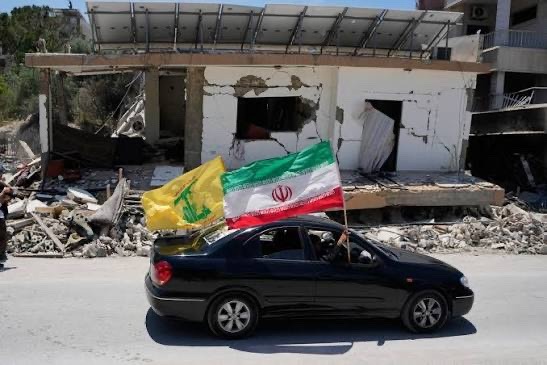
Trump’s remarks come amid escalating tensions between the United States and Iran and growing concerns over maritime security in the Strait of Hormuz, one of the world’s most important routes for oil shipments.
The United States and Iran had announced ceasefire agreements in April and June aimed at restoring freedom of navigation through the Strait of Hormuz and creating conditions for ending the conflict, which has continued for nearly six months. However, both agreements quickly collapsed.
On July 13, the United States reimposed a blockade on Iranian ports and restrictions on shipping following the collapse of the ceasefire agreement, in an effort to pressure Tehran and deprive it of oil revenues, a major source of foreign currency for the country.
Earlier, Axios reported that the Trump administration was considering the possibility of carrying out “limited strikes” against Iran in the Strait of Hormuz, with the aim of preventing Tehran from rebuilding its radar and missile capabilities and reducing the risk of attacks on commercial vessels and oil tankers in the region.