

Written by Azza Elfashny
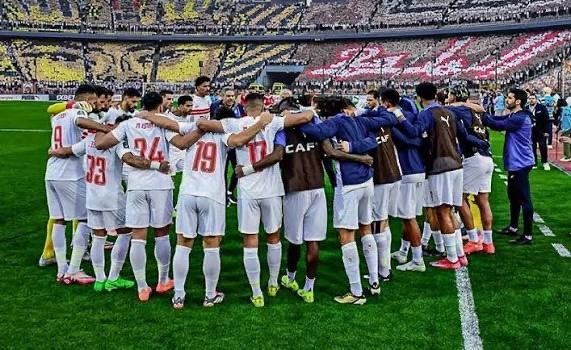
The concern that surfaced in the Israeli Knesset over Egyptian army drills near the fence with Gaza is not born of direct military fear, but of a shift in the meaning the border itself carries. For long years, Israel dealt with Sinai as a militarily silent space under the agreements, to the point that any sound of Egyptian tank treads there became audible in Tel Aviv before it reached Gaza. The drill reminds them that sovereignty is not measured by the number of clauses, but by a state’s ability to move its weapons on its own land whenever it chooses. When an Egyptian tank moves meters from the fence, it does not target anyone, yet it nullifies the idea that this area is a vacuum Israel alone can fill with its decisions. The Knesset reads the drill as an unwritten declaration that the deterrence equation has changed, and that the era of unilateral action on Egypt’s border is over. What truly worries them is not the live rounds fired in the maneuver, but the silence those rounds shattered. The silence that had granted them the illusion of controlling the rhythm of the border. When Egypt trains on its land, it is saying that geography has returned to its owner, and that Egyptian national security is not run from others’ rooms nor bound by their anxiety. That is why there was anger, because the drill redefined the fence: from a dividing line to a line of sovereignty, from a supposed point of weakness to a declared point of strength.
When an Egyptian tank crosses near the border fence in Sinai, it is not only the sand that shakes, but entire calculations in Tel Aviv shake with it. The scene was not an ordinary army exercise, but a signature in fire on a new equation: Sinai is not a footnote in others’ ledgers. Meters from the fence that separates war from truce, the Egyptian army chose to raise its voice in iron, and the halls of the Knesset trembled before the echo returned. The Israeli anger was not at the maneuver, but at the truth it revealed. The era of silent borders is over. The era of free Egyptian decision-making has begun.
When the Egyptian army trains near its borders, it is natural, because every state protects its land. But when members of the Israeli Knesset heard the sound of these drills near the fence, their fears stirred and their voices rose in anger. It was not the training itself that angered them, but the clear message: Sinai is Egyptian land, and its army alone decides how and when to protect it.
When a tank moves over the soil of the homeland, its sound rises in every capital of the world. That is what happened when the Egyptian army conducted field drills near the border fence with the Gaza Strip. The echo of tank treads on Sinai’s sand turned into political noise inside the halls of the Israeli Knesset. The anger that erupted under the parliament dome in Tel Aviv was not born in the moment. It is the accumulation of changed equations and rules of engagement rewritten on the ground, far from the cold texts that governed the relationship for decades.
Borders are not a line on a map, but a sovereign decision protected by force
Israel, accustomed to seeing Sinai through special security arrangements since the signing of the peace treaty, found itself facing a new scene. A scene of an army training with live ammunition meters from the fence, raising its readiness, testing its weapons, and affirming that borders are not a line on a map but a sovereign decision protected by force. For some Knesset members, especially the right wing, this move shattered a stereotype that had settled in the Israeli mind for years: the image of Sinai as a quiet buffer zone subject to precise, agreed-upon calculations. Thus the reaction was sharp. It took the form of accusations that the Israeli government was weak, and descriptions of the Egyptian drills as a deliberate show of force and a veiled threatening message.
The truth is that the anger in the Knesset is directed at the Israeli domestic audience more than at Egypt. It is part of the political one-upmanship that flares up whenever the security file comes to the fore. From Cairo’s angle, the matter is entirely different. Sinai is Egyptian land, and securing it is a constitutional duty and a doctrine entrenched in the Egyptian army. The drills near the fence are not directed against any party. They are a natural sovereign practice by an army that knows its eastern border is going through its most complex phase since the October War. The collapse of the situation in Gaza, attempts to impose a fait accompli at the Rafah crossing, and the open and secret talk of displacement scenarios are all sufficient reasons for Egypt to raise its readiness to the maximum. The army does not wait for permission to protect its eastern gate. Nor does its training submit to a political mood in Tel Aviv. Moreover, security coordination between Cairo and Tel Aviv exists through military channels. Egypt has never violated a commitment it pledged. But it has also never relinquished its right to protect its national security in the way it deems appropriate.
Post–October 7 is not like before
What is missed by many of the angry voices in the Knesset is that the equation after October 7 is no longer the same as before. Egypt declared clearly that it will not accept the liquidation of the Palestinian cause at the expense of its land, and that the displacement of Palestinians to Sinai is a red line that means war. These positions were not for media consumption; they were translated into measures on the ground, into a firm political tone, and into military drills that prove the word is backed by force. That is why the sight of Egyptian army vehicles maneuvering near the fence alarms some Israeli politicians. The Israeli anger also reveals a strategic predicament. Tel Aviv wants quiet borders with Egypt. Yet at the same time, it takes decisions and actions in Gaza that increase the likelihood of explosion and push the crisis toward the Egyptian border. It wants Cairo to control security and prevent chaos. Yet it is disturbed when it sees Cairo doing so by reinforcing its military presence. This duality is what creates tension. Egypt says clearly: the security of Sinai is my responsibility alone. I will not allow it to become a theater for exporting others’ crises. And I will not accept that my army’s hand be tied while it defends its sand.
The era of Egyptian silence has ended
The Egyptian drills will continue because they are part of a combat doctrine that does not change with media noise. And the anger in the Knesset will remain an internal echo that will not alter the fact that Sinai has returned to the regional equation as a hard number. The lesson that must reach all parties is that the era of Egyptian silence has ended. Egypt threatens no one. But it allows no one to threaten it or to impose on it what it rejects. And when the army beats the drums of training near the fence, it does not beat the drums of war. It reminds everyone that borders have owners, that sovereignty has a price, and that the army that liberated the land in October is still capable of protecting it at all times.
In the end: the prestige of states is not measured by the noise of parliaments, but by the steadiness of rifles on the border. The Egyptian army’s drills near the fence were not a message of anger, but a document of sovereignty written in steel and gunpowder. Sinai belongs to the Egyptians; they protect it when they wish and how they wish. Whoever is disturbed by the sound of the tank should close his window. Because the army does not lower its voice to please anyone. Egypt has spoken its word on the ground: here is a red line drawn in blood. It will not be erased by objections in the Knesset, nor by calculations in closed rooms. Borders liberated by war are not managed by anxiety.
exists through military channels. Egypt has never violated a commitment it pledged. But it has also never relinquished its right to protect its national security in the way it deems appropriate.