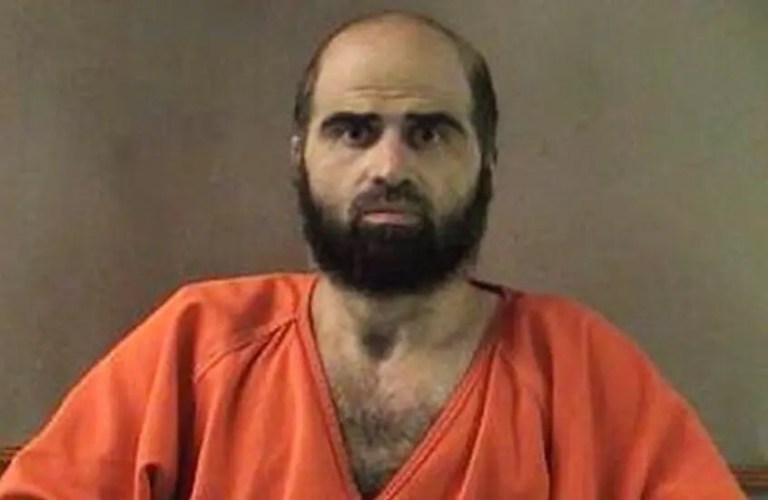

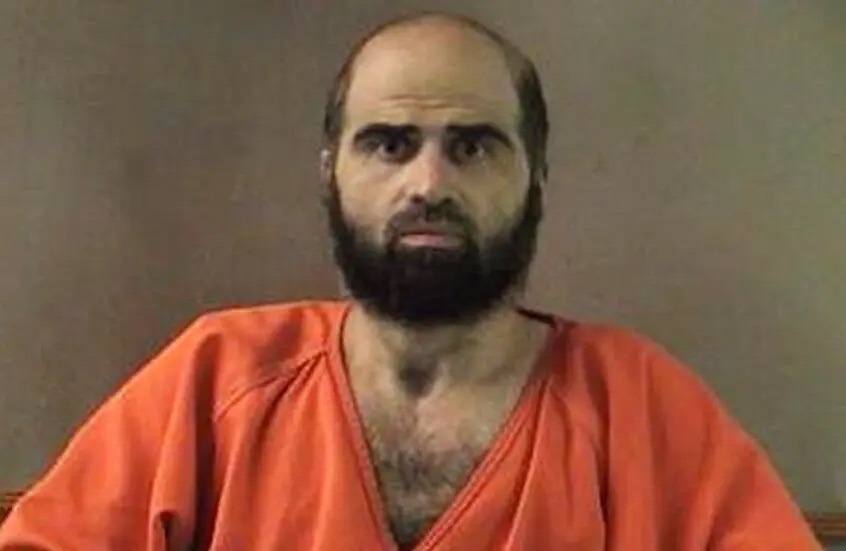
Nidal Malik Hasan’s story transformed from that of a U.S. Army officer and psychiatrist into one of the most prominent cases of violence at an American military installation. In 2009, he carried out a shooting at Fort Hood in Texas, killing 13 people and injuring dozens of others.
In August 2013, a military court convicted him of premeditated murder and attempted premeditated murder and sentenced him to death.
Early Life and Palestinian Heritage
Nidal Hasan was born on September 8, 1970, in Arlington County, Virginia, to a Palestinian family originally from Al-Bireh in the occupied West Bank. He grew up in the United States and joined the U.S. Army in 1988.
These details indicate that Hasan was born and raised in the United States rather than immigrating there as an adult.
It is also important to distinguish Hasan’s family background from the motives examined by investigators. The cited judicial records do not establish a connection between the crime and the Palestinian cause or the Palestinian struggle for national rights.
From Military Service to Psychiatry
Hasan studied biochemistry at Virginia Tech before attending the Uniformed Services University of the Health Sciences, where he graduated as a physician in 2003.
After graduation, he specialized in psychiatry at Walter Reed Army Medical Center, working with military personnel, including service members experiencing psychological effects associated with deployments to Iraq and Afghanistan.
In May 2009, Hasan was promoted to major. Two months later, he was transferred to a medical facility at Fort Hood. He was scheduled to deploy to Afghanistan before the shooting, a detail investigators examined in relation to his possible motives, although it is not sufficient on its own to explain the crime.
Signs of Radicalization and Security Failures
Investigators focused on Hasan’s views regarding U.S. wars in predominantly Muslim countries and his communications with Anwar al-Awlaki, an American-born cleric of Yemeni descent who was associated with al-Qaeda in the Arabian Peninsula and was killed in a U.S. strike in Yemen in 2011.
According to a 2011 report by the U.S. Senate Homeland Security and Governmental Affairs Committee, Hasan’s correspondence with al-Awlaki and other indicators pointed toward a path of violent radicalization.
The committee concluded that the U.S. Army and the Federal Bureau of Investigation had information that could have helped identify this trajectory but failed to assess and address it appropriately.
During the early stages of the investigation, however, the FBI said it had not reached a conclusion that Hasan was involved in or planning terrorist activity. His motives had not yet been fully established at that stage.
The case highlights the difference between initial assessments and findings that emerged after a broader review of the evidence and communications.
The Fort Hood Shooting and Military Trial
On November 5, 2009, Hasan opened fire inside a soldier readiness center at Fort Hood, targeting military personnel inside the facility. The shooting killed 13 people. Reports put the number of injured at between 31 and 32, depending on how the casualties were counted.
During his 2013 trial, Hasan acknowledged carrying out the attack and linked his position to his belief that the United States was waging a war against Islam, according to trial coverage.
On August 28, 2013, he was unanimously sentenced to death after being convicted. The case subsequently became a focus of debate over security at U.S. military installations, the ability of institutions to detect warning signs of radicalization, and the sharing of information between intelligence agencies and military leadership.
Execution Sentence
In March 2025, the U.S. Supreme Court rejected Hasan’s request for a review of his sentence, according to published reports on the case.
In October 2026, Reuters reported that his execution by firing squad had been scheduled for December 3, following approval by U.S. President Donald Trump on the recommendation of Defense Secretary Pete Hegseth.
The news agency also quoted a Defense Department official as saying that authorities intended to livestream the execution online.
Nidal Malik Hasan’s case continues to raise questions about the ability of military and security institutions to identify warning signs of radicalization before they lead to violence. His Palestinian heritage, however, should be distinguished from the motives examined by investigators in connection with the shooting.