
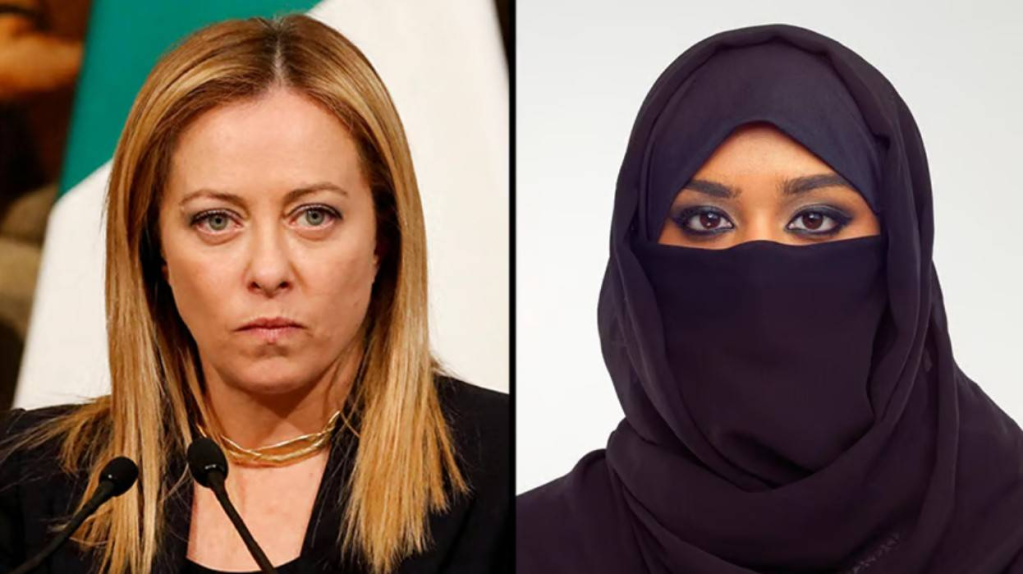
A law banning the wearing of niqabs and other face coverings in Italian schools came into force on Thursday, following final parliamentary approval of legislation that also introduces new rules governing the placement of foreign students who do not have sufficient proficiency in the Italian language in classrooms.
The Italian Chamber of Deputies approved the law by 142 votes to 112, after it had been approved by the Senate, replacing a previous government decree that prohibited face coverings in schools.
Prime Minister Giorgia Meloni, who leads a coalition of three right-wing and conservative parties, had announced the ban following the summer holidays.
30% Cap on Foreign Students With Insufficient Italian Skills
Under the new legislation, a maximum limit of 30% will apply, starting from the 2027–2028 academic year, to foreign students who do not have sufficient Italian-language proficiency in the first-grade classes across different educational stages.
The measure applies to children who do not hold Italian citizenship, were not born in Italy, and have not attended an Italian kindergarten for at least two years.
In secondary schools, students must have spent at least three years in Italian schools to be exempt from the specified limit.
Parents Required to Learn Italian
The law also requires parents to learn the Italian language as part of measures related to regulating the presence of foreign students in educational institutions, alongside the new rules governing their distribution among classrooms.