
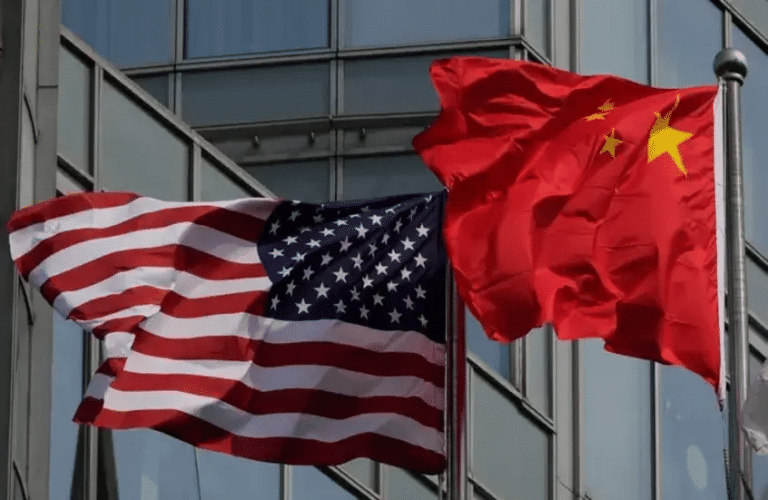
China on Thursday strongly rejected a U.S. proposal to impose additional tariffs on several economies, stressing that it reserves the right to take firm and proportionate measures to protect its legitimate trade interests.
Chinese Commerce Ministry spokesperson He Yadong said during a press conference that the U.S. investigation conducted under Section 301 concerning what Washington described as excess production capacity represents a unilateral approach that seriously disrupts the international economic order and violates World Trade Organization rules.
The Chinese official urged the United States to correct its practices and return to the proper path of resolving disputes through dialogue and consultation.
He added that Beijing would closely monitor developments and reserves the right to take necessary and proportionate measures to defend its legitimate rights and interests.
Proposed U.S. Tariffs Could Reach 35%
The Office of the United States Trade Representative announced on Wednesday the findings of an investigation conducted under Section 301 concerning what it described as “excess capacity,” proposing additional tariffs on 14 economies, including China, the European Union, Japan, South Korea and Taiwan.
Washington said the move aims to address excess industrial production capacity and curb unfair trade practices.
The proposed tariffs range from 15% to 35%, with China, Vietnam, India and Singapore facing the highest rates.
The proposed U.S. measures are based on Section 301 of the Trade Act of 1974, amid concerns that trade tensions could escalate and that pressure on trading partners could increase to secure agreements with Washington.
Trade Truce Between Beijing and Washington Remains in Place
These developments come despite China’s announcement on November 9 that it had extended its trade truce with the United States for two months, aiming to provide a stable environment for economic cooperation between the two countries.
At the time, China’s State Council Tariff Commission said in a statement that it had decided to extend the suspension of an additional 24% tariff on U.S. imports for two months, while maintaining an additional tariff of 10%.
The suspension is set to remain in effect until January 10, 2027, as part of the trade understandings between Beijing and Washington.
The two countries had reached a temporary trade truce during a meeting between U.S. President Donald Trump and Chinese President Xi Jinping in the South Korean city of Busan in October 2025.