
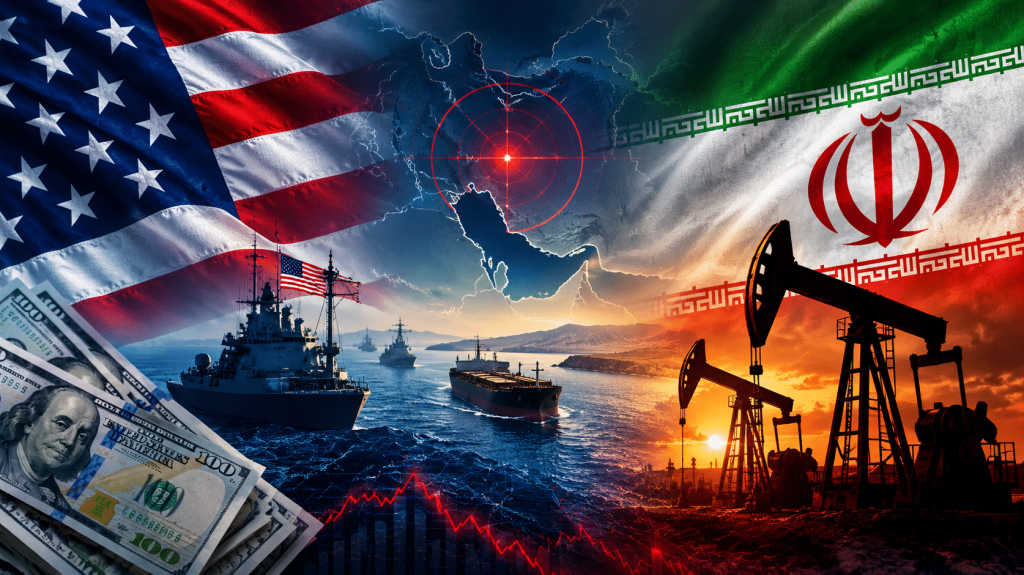
As uncertainty continues over Washington’s decision on whether to resume military operations against Tehran, the United States is stepping up economic pressure on Iran through measures targeting its commercial and financial networks abroad. Washington is also seeking to push Asian countries and financial institutions operating in the region to comply with U.S. sanctions against Iran.
In this context, U.S. Treasury Department officials met this week with officials in Singapore and Malaysia, including representatives of regulatory bodies and national security agencies, to warn them of the potential risks they could face if they fail to comply with U.S. sanctions on Iran, according to media reports.
Washington Targets Iran’s Supply Chains
The United States urged both countries, as well as law firms and banks operating within their jurisdictions, to exercise caution regarding companies allegedly used by Iran as front organizations to conduct commercial and financial activities.
A U.S. Treasury official said Washington was calling for stricter due diligence in sectors it considers high-risk, particularly maritime transport, aviation services and supply networks, to ensure they are not used to serve Iranian interests.
“We also want to make it clear that we will target these supply lines, and there will be no room for negotiation when we identify a supply line that needs to be targeted,” the official said.
The official added that U.S. pressure had begun to affect Iran’s sources of revenue, citing data that he said showed the country recording its worst economic contraction in four decades and its highest inflation rate since World War II.
Oil at Sea: A Route Around Sanctions
Maritime transport has been one of the main channels Iran has relied on to circumvent sanctions. For years, Iranian oil tankers have regularly stopped in waters around Malaysia, Singapore and Indonesia to carry out ship-to-ship oil transfers.
These operations help conceal the actual origin of oil shipments and facilitate their entry into international markets, bypassing restrictions imposed on Iranian oil exports.
Malaysian authorities announced last year that they intended to tighten enforcement of regulations governing these operations. In February, they also seized two tankers and their cargoes.
Meanwhile, the U.S. Navy has maintained a blockade since April on shipping traffic bound for Iran through the Strait of Hormuz. Washington also tightened restrictions this month on movement across Iran’s land borders and through the Caspian Sea.
“Economic Pariah”: U.S. Campaign Targets Iranian Networks
Since the United States and Israel launched military strikes against Iran in February, Washington has intensified efforts to curb Tehran’s commercial interests abroad and pursue the networks that enable it to sustain economic activity and circumvent restrictions.
In August, the U.S. administration launched “Operation Economic Pariah,” followed by a new wave of sanctions targeting various entities, including cryptocurrency platforms in Canada and a major Russian banking group.
The latest U.S. moves in Southeast Asia reflect the widening scope of this campaign. Washington’s efforts are no longer limited to targeting individuals and companies linked to Iran, but have also expanded to putting pressure on countries and financial and commercial institutions that may provide an operating environment for Iranian economic networks or facilitate their activities.