
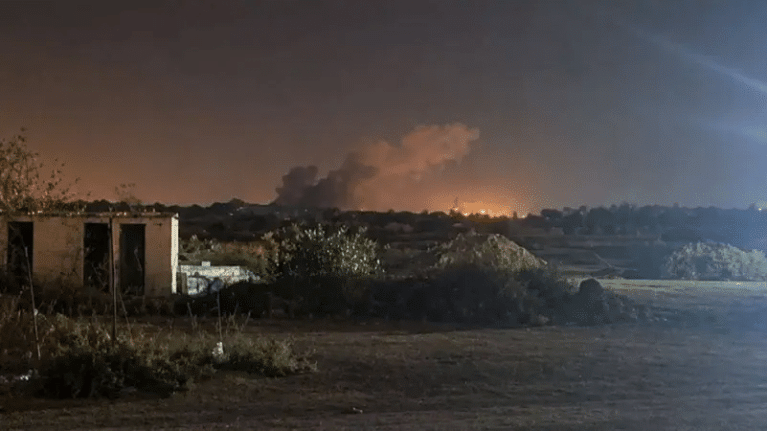
An explosion was reported on Iran’s Qeshm Island, overlooking the Strait of Hormuz, on Friday, amid growing indications that military confrontation between the United States and Iran could resume, as reports point to possible U.S. and Israeli preparations for a new attack on Tehran in the coming period.
Iranian reports said a missile struck an area on the outskirts of Qeshm city at approximately 6:50 p.m. local time. The Tasnim news agency reported that the missile had been launched by the United States, although Washington has not issued any confirmation regarding the incident or responsibility for it.
The extent of the damage caused by the reported missile strike remains unclear. There has been no information on possible casualties or material losses, and Iranian authorities have not provided further details about the nature of the site targeted.
Tanker Hit by Projectile Near Omani Coast
In a separate development, the United Kingdom Maritime Trade Operations (UKMTO) reported that an oil tanker had come under attack by a projectile while leaving the Strait of Hormuz, approximately eight nautical miles off the coast of Khasab, Oman.
In a statement issued on Friday, the agency said the tanker was struck by an unidentified projectile on its port bow, or left-hand side, triggering a fire on board. No casualties or environmental damage were reported.
The agency did not disclose the vessel’s identity or identify those responsible for the attack. The extent of the damage to the tanker also remains unknown.
Iran’s Islamic Revolutionary Guard Corps Navy, however, offered a different account of the incident, saying that an oil tanker it described as “non-compliant” had exploded and caught fire after striking naval mines near the entrance to Khasab Port.
The Iranian Navy claimed that the incident occurred as the tanker attempted to cross the Strait of Hormuz through an unauthorized route, with the support of the U.S. military, according to Tasnim.
Previous U.S. Strikes on Qeshm Island
The latest developments follow reports of U.S. strikes on several locations on Qeshm Island last Tuesday.
Ahmad Nafisi, deputy governor of Hormozgan Province, said the attacks had not caused damage to residential or commercial areas or to infrastructure.
Qeshm Island holds major strategic importance because of its location in the Strait of Hormuz, off Iran’s southern coast and near the city of Bandar Abbas. It lies alongside one of the world’s most important maritime routes for transporting oil and natural gas, giving it particular military and economic significance amid regional tensions.
Washington and Tel Aviv Consider New Attack on Iran
The incidents come amid reports of U.S. and Israeli preparations for a possible resumption of military operations against Iran in the coming period.
Sources familiar with the matter told CBS News that the United States and Israel are considering launching a new attack on Iran in the near future, potentially before January.
According to the sources, Israeli Prime Minister Benjamin Netanyahu is concerned about the speed at which Tehran is rebuilding its ballistic missile production capabilities, as well as the accelerated reinforcement of its military and nuclear infrastructure against potential attacks.
The sources said Iran has been moving more facilities to underground locations as part of those efforts.
Stalled Understandings and Continued Confrontation
These developments come as tensions between the United States and Iran continue following the outbreak of war on February 28, when Washington and Israel launched military strikes against Iran. Tehran responded with attacks targeting Israel and U.S. military facilities in several countries across the region.
On June 18, Washington and Tehran reached a memorandum of understanding brokered by Pakistan and Qatar. However, implementation stalled because of disagreements over guarantees for freedom of navigation and maritime security in the Strait of Hormuz.
Confrontations between the two sides resumed in July, while diplomatic efforts to end the conflict continued amid growing concerns that further escalation could threaten maritime security and energy supplies across the region.