


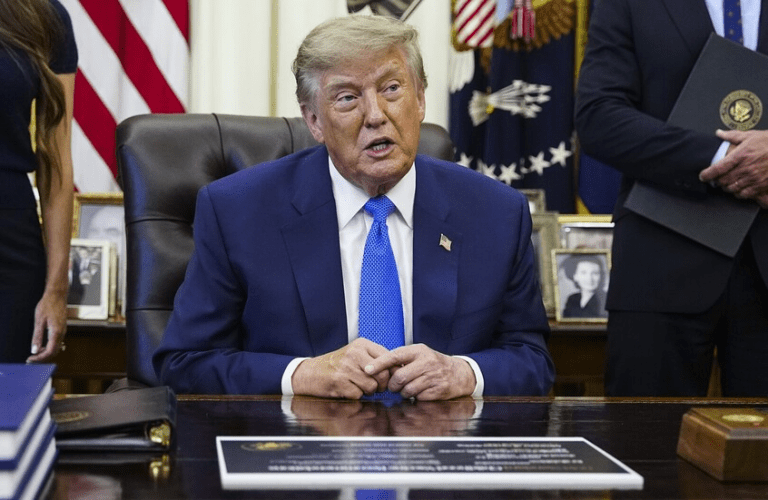
U.S. President Donald Trump signed the “Lindsey O. Graham Sanctioning Russia and Iran Act of 2026” into law on Friday, expanding statutory sanctions, tariffs and restrictions targeting Russia while extending existing sanctions on Iran.
The legislation opens the way for increased economic pressure on Moscow and expands trade measures targeting countries that continue to purchase Russian energy.
The law targets Russia’s energy and defense sectors, as well as networks and vessels associated with efforts to circumvent existing sanctions. It also extends sanctions already imposed on Iran.
Broad Powers to Impose Tariffs
The legislation gives the U.S. president broad authority to impose tariffs on countries that continue purchasing Russian oil and natural gas.
Under the law, tariffs of up to 100% can be imposed on goods from countries that continue buying Russian energy or assist in circumventing sanctions. The legislation also authorizes tariffs of up to 500% on certain Russian imports, including energy-related products.
The new powers give the administration considerable flexibility in determining when and how the tariffs are applied, while allowing for exemptions under conditions set out in the legislation.
Possibility of Easing Sanctions After a Peace Agreement
The law also includes provisions allowing the president to terminate certain sanctions imposed under the legislation if conditions related to reaching a peace agreement over the war in Ukraine and ending hostilities are met.
The provision preserves the possibility of lifting some restrictions if progress is made toward a political settlement of the conflict.
Increased Pressure on Russia and Iran
The legislation was approved by both chambers of Congress before being sent to the president. The House of Representatives approved the Senate amendments to H.R. 5334 by a vote of 262 to 159 on September 16, while the Senate had previously approved the measure by an 86–11 vote.
The law targets Russian officials, networks and foreign parties linked to Moscow, as well as financial institutions, the energy sector and oil tankers involved in efforts to circumvent sanctions.
It also extends existing restrictions on Iran and maintains U.S. authorities to impose sanctions related to the country.
Trump’s signing of the legislation marks an expansion of the legal framework for using sanctions and tariffs as additional tools of economic pressure on Russia, while retaining the possibility of easing certain measures if progress is achieved toward a settlement of the war in Ukraine.


