
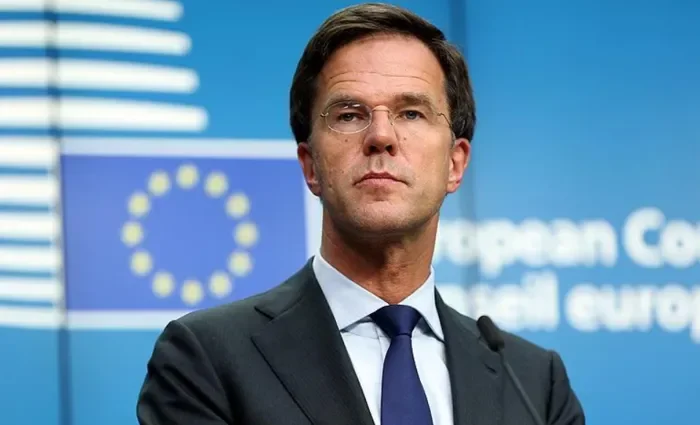
NATO Secretary General Mark Rutte has called on member states to prepare their military personnel, civilians, government institutions, and businesses for the possibility of war, stressing the need to strengthen societal resilience and readiness for crises and emergencies.
Speaking at a session of the NATO Parliamentary Assembly in Berlin on Monday, November 23, Rutte said alliance members must improve their societies’ preparedness by involving businesses, national and local authorities, and citizens in planning for potential crises.
He explained that these preparations should ensure the continuity of essential services in the event of an armed conflict, including electricity and heating supplies, as well as the continued operation of hospitals, transportation systems, and communications networks.
Rutte cited the experiences of Norway, Sweden, Denmark, and Finland, highlighting the importance of informing citizens about the steps they should take in the event of war and strengthening coordination between civilian agencies and the armed forces.
Rutte Calls for Defense Spending to Reach 5% of GDP
In a related development, the NATO chief urged member states to accelerate implementation of the decision adopted at the alliance’s summit in The Hague, which calls for increasing defense and security spending to 5% of gross domestic product by 2035.
The target is divided into two components: 3.5% of GDP for core defense requirements and 1.5% for security-related investments and civilian preparedness.
On Monday, the NATO Parliamentary Assembly also adopted a resolution calling for a whole-of-society approach to resilience, updated legislation to protect critical infrastructure, and guarantees that essential services remain operational during emergencies.
Moscow Warns of Risks of Confrontation with NATO
Meanwhile, Vladislav Maslennikov, head of the European Affairs Department at Russia’s Foreign Ministry, warned that increased NATO activity in the Baltic Sea raises the risk of unintended incidents and could lead to a direct military confrontation between Russia and the alliance.
Russian Foreign Ministry spokeswoman Maria Zakharova said on November 20 that Moscow had no intention of attacking NATO member states, while accusing the alliance of developing plans for a military confrontation with Russia.
For years, Moscow has voiced concern over what it describes as unprecedented NATO activity near its western borders, criticizing the expansion of the alliance’s military presence and defense initiatives in Europe under the banner of deterring what Western countries describe as a Russian threat.
Russian President Vladimir Putin has repeatedly said that Russia sees no reason to enter into a conflict with NATO, while warning that the country would use all its forces and resources to repel any attack against it.