
An initial working draft of a proposed framework for negotiations between the United States and Iran has outlined a series of possible arrangements, including addressing Iran’s stockpile of highly enriched uranium, reopening the Strait of Hormuz to international maritime traffic, and exploring an international role in guaranteeing the implementation of any potential agreement.
The draft proposes exploring an early commitment from Iran regarding its stockpile of highly enriched uranium, including the possibility of transferring the material to a mutually agreed third country or reducing its enrichment level, subject to technical arrangements and verification measures agreed upon by both sides.
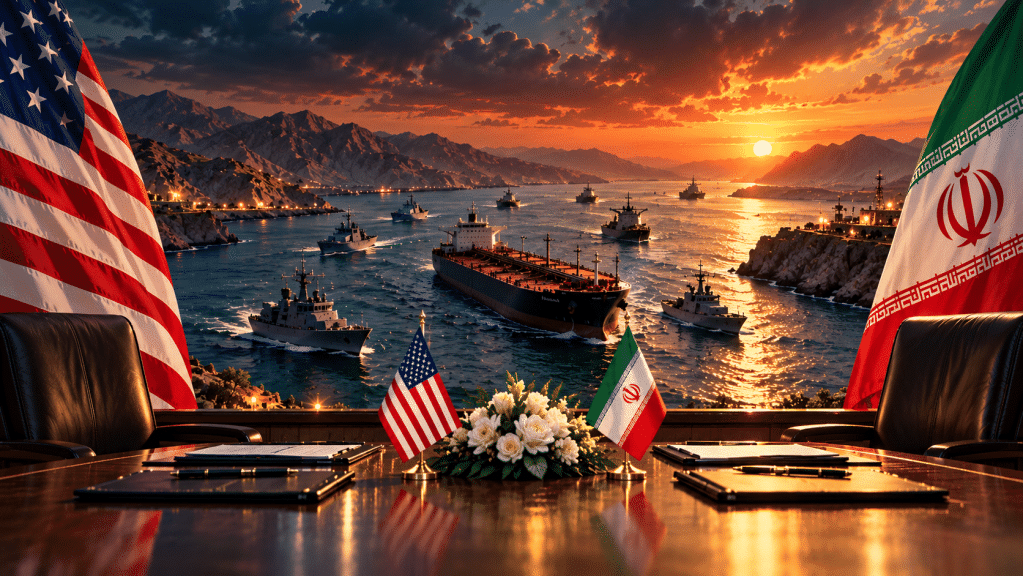
The framework also includes discussions on arrangements to reopen the Strait of Hormuz to international maritime traffic within seven days of reaching an initial understanding. This would involve daily confidence-building measures implemented by the parties to ease tensions and ensure the safety and security of international shipping.
Potential Role for China in Guaranteeing the Agreement
The draft proposes exploring the establishment of an international mechanism to ensure that Washington and Tehran fulfill their mutual commitments, including consideration of a potential role for China as a guarantor of the implementation and sustainability of any resulting agreement.
Mediators are also seeking Iran’s approval to hold a round of direct negotiations, with Doha being considered as an alternative to Istanbul amid reported Iranian security concerns about holding the talks in Turkey. This would be subject to mutual agreement on the level of representation and appropriate security guarantees for participating delegations.
The proposal also calls for a phased timetable for the simultaneous and reciprocal implementation of commitments by the United States and Iran. Under this arrangement, each Iranian measure concerning the nuclear file and maritime security would be matched by a clearly defined US action aimed at easing sanctions, the blockade, and economic restrictions.
These arrangements would be subject to an independent verification mechanism, ensuring that neither side is required to make major concessions in advance without receiving corresponding, verifiable commitments from the other party. The proposal also calls for clear procedures to address delays or Iranian non-compliance.
Pakistan: Cautious Optimism Over Mediation Between Washington and Tehran
Meanwhile, a Pakistani military spokesperson said the country’s military establishment was “cautiously optimistic” about its mediation efforts between Iran and the United States. The remarks came in his first interview since a high-level delegation visited Tehran earlier this week.
Pakistani Army Chief Field Marshal Asim Munir has visited the Iranian capital twice this month as part of Pakistan’s role as a key mediator in efforts to de-escalate the eight-month-long conflict involving Iran.
Asked whether the two visits had produced positive indications, spokesperson Ahmed Sharif Chaudhry said: “Why would the field marshal visit Tehran twice if there were not some degree of positivity? So yes, definitely.”
Chaudhry, Director General of the Inter-Services Public Relations, added: “The phrase we always use is cautiously optimistic.” He also warned that there were “powerful spoilers” seeking to obstruct the process because they believed the conflict served their interests, without identifying any parties.
Qatari Delegation Arrives in Tehran for Talks with Iranian Officials
In a related development, a Qatari delegation arrived in Tehran on Friday for talks with Iranian officials, as mediators continue efforts to revive peace negotiations with the United States.
Iran’s official news agency reported that the delegation, headed by the first adviser to Qatar’s prime minister and foreign minister, had arrived to meet senior Iranian officials and discuss bilateral relations between the two countries, as well as regional developments.
The visit came a day after Iranian media reports said Tehran had received a message from US Vice President JD Vance addressed to Iranian Supreme National Security Council Secretary Mohsen Rezaei. The reports emerged alongside indications that the United States was preparing to consider new military options against Iran.
Qatar and Pakistan are playing mediation roles in efforts to revive peace negotiations following a ceasefire agreement reached in April. However, these efforts have yet to produce a lasting agreement.