
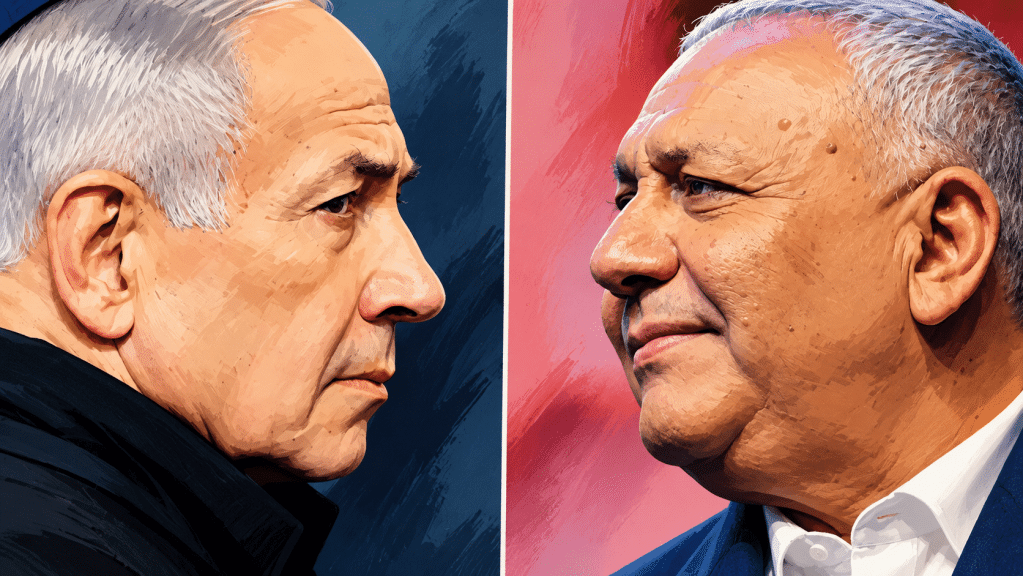
The latest Israeli election results, with approximately 89.8% of votes counted, show Prime Minister Benjamin Netanyahu’s bloc leading with 53 seats, compared with 48 seats for the camp led by his rival, former army chief Gadi Eisenkot.
According to preliminary results, slightly more than five million votes have been counted. However, both blocs remain short of the 61 seats required to secure a parliamentary majority in the 120-seat Knesset.
Arab parties have secured 19 seats, in what has been described as a historic performance. Their potential cooperation with other opposition parties could prove crucial in forming a coalition capable of ending Netanyahu’s rule.
Uncertainty Over the Formation of the Next Government
Political negotiations are expected to continue over the coming weeks as officials await the final results, which could be announced on Thursday evening. So far, there are no clear indications that either bloc has secured a decisive advantage.
One of the main challenges facing Netanyahu’s opponents is whether opposition parties will be willing to cooperate with Arab parties to assemble the seats needed to form a new government.
Netanyahu Warns Against a Government Including Arab Parties
On Wednesday, Netanyahu warned against the formation of what he described as a “dangerous government” that could include Arab parties. He noted that voters represented by these parties account for approximately 20% of Israel’s population.
The preliminary results point to a complex political landscape, with neither bloc holding an outright majority. As a result, coalition-building and negotiations among political parties are likely to play a decisive role in determining the composition of the next government.