
The US naval blockade imposed on Iran has entered its 130th day, amid escalating Iranian attacks on commercial vessels and oil tankers in the Strait of Hormuz, alongside a notable decline in shipping traffic through one of the world’s most important energy transportation routes.
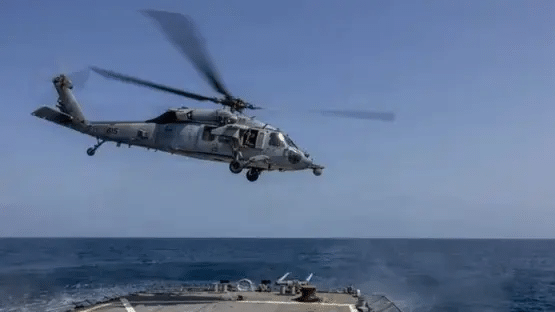
The US Central Command (CENTCOM) published a video on its account on the social media platform X, marking the 130th day since the blockade began. It reaffirmed that US forces continue to prevent Iran’s Islamic Revolutionary Guard Corps (IRGC) from exporting billions of dollars’ worth of crude oil.
CENTCOM stated that US forces are “continuing to enforce the blockade with focus, determination, and exceptional professionalism,” referring to ongoing operations aimed at restricting Iranian oil exports.
Separately, a US official denied claims made by Iran that an American military aircraft had been targeted and shot down, according to Al Arabiya and Al Hadath television channels.
Objectives of the US Blockade on Iranian Ports
The United States imposed the naval blockade on Iranian ports and coastal areas following the collapse of negotiations between Washington and Tehran in July. The measures included intercepting vessels heading to or departing from Iranian ports.
Washington aims to deprive Iran of oil export revenues, one of the country’s main sources of economic income, and pressure Tehran into making concessions in negotiations. The blockade also seeks to target oil transportation networks used to circumvent sanctions, including what is known as the “shadow fleet.”
Decline in Shipping Traffic Through the Strait of Hormuz
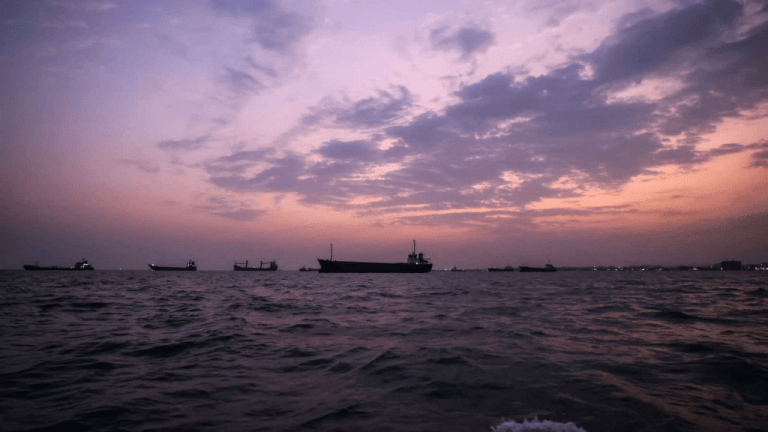
The maritime escalation has begun to affect oil shipments through the Strait of Hormuz, with volumes declining amid near-daily Iranian attacks on vessels, according to a report by the Financial Times.
The developments coincided with renewed attacks on ships in the region. The United Kingdom Maritime Trade Operations (UKMTO) reported that two oil tankers had been targeted by unidentified projectiles while sailing toward the exit of the Strait of Hormuz, in the latest incident involving commercial vessels along the strategic shipping route.
The agency reported that 263 vessels entered and exited the strait during the week ending November 18, representing a decline of approximately 15% compared with the previous week and 20% compared with the week before that.
These figures come against a backdrop of approximately 135 vessels passing through the strait daily before the US-Israeli strikes on Iran in late February. At that time, the vessels carried around one-fifth of global oil and gas supplies, in addition to other products.
Preliminary data from the Kpler platform also showed that oil flows through the strait during the second week of November approached half the levels recorded during the first week of the month.
Iran Expands Its List of Non-Compliant Vessels
Meanwhile, Iran continues to add vessels to a list it describes as “non-compliant ships.” Vessels are often placed on the list after being attacked, with Tehran alleging that they violated its protocols for passage through the Strait of Hormuz.
This comes despite the fact that Iranian territorial waters cover only part of the shipping channel, raising further disputes over navigation rules and control of maritime traffic in the region.
Stalled Negotiations Deepen Escalation Between Washington and Tehran
The maritime escalation is closely linked to the failure of diplomatic efforts to resume negotiations between Washington and Tehran, despite Qatari efforts to revive the talks.
US President Donald Trump has said that Iran wants to reach an agreement, but stressed that Tehran’s proposed conditions remain unacceptable to him. He has also warned that further strikes against Iran could be carried out if necessary.
Tehran, meanwhile, continues to insist on its seven conditions for returning to the negotiating table. These include an end to the war on all fronts, the lifting of US sanctions, the termination of the naval blockade on Iranian ports, and the release of Iranian assets frozen abroad.
These developments reflect the continuation of the confrontation between the two sides on both military and economic fronts, amid growing risks to international trade and global energy supplies, with no clear signs of an imminent diplomatic settlement.