
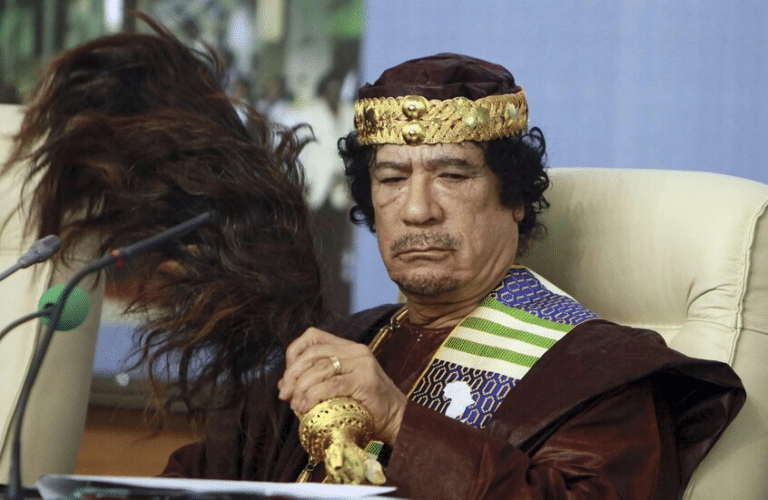
Newly declassified British documents have shed light on a diplomatic dispute between Libya and several European countries in 1996, after Tripoli imposed conditions on a planned visit by the European Union’s “troika” delegation. The demands exposed divisions within the group over how to deal with Libyan leader Muammar Gaddafi.
According to a report by Independent Arabia based on historical records, the dispute emerged during preparations for a visit to Tripoli scheduled for April 3–4, 1996. The arrangements became increasingly complicated after Libyan officials objected to the timing of the visit and the proposed agenda.
Libya Objects to the Visit’s Agenda
A British diplomatic cable dated April 16, 1996, which summarized a message sent from Tripoli on April 3, indicated that Libya’s conditions prompted British officials to recommend postponing or canceling the mission rather than accepting the demands put forward by the Libyan authorities.
One of the main points of contention was Libya’s objection to having its visit included in the same diplomatic itinerary as a visit to Iran. Tripoli viewed the connection between the two countries as carrying unacceptable political implications.
British officials had deliberately linked the two visits, fearing that separate European diplomatic initiatives in the region could weaken the political message intended for both Tehran and Tripoli.
Libya did not reject the delegation’s visit outright. Instead, it requested that the trip be postponed until after Easter, that additional issues be added to the talks, and that written messages not be delivered during the meeting. The proposed agenda included relations between the European Union and Libya, as well as the Lockerbie case.
British assessments warned that accepting these conditions could allow the Libyan leadership to portray the visit as evidence of improving relations with Europe, potentially overshadowing the mission’s intended political objectives.
European Countries Divided Over Policy Toward Tripoli
The documents revealed differing positions among European governments. Britain, the Netherlands and France favored a strict interpretation of the delegation’s mandate, while Italy and Spain supported proceeding with the mission and argued that some flexibility could help secure a successful outcome.
British officials recommended rejecting the proposal to reschedule the visit for after Easter. They argued that canceling the mission would have little impact, given the limited expectations that Libya would change its position on terrorism and the Middle East peace process.
The visit ultimately went ahead, but its outcome triggered further disagreements within the European group.
The British delegation criticized the way the mission had been conducted, arguing that the troika had gone beyond the mandate established at a meeting in Palermo and had delivered a message to the Libyan side that was warmer than intended.
London maintained that the mission’s primary purpose was to send a clear message on terrorism and the Middle East peace process, rather than open a new path toward closer EU-Libya relations.
Lockerbie Case and Air Embargo at the Center of Dispute
The documents indicated that the delegation had not been authorized to discuss the details of the Lockerbie case or offer positive signals about Libya’s possible participation in the Barcelona Process, the framework for Euro-Mediterranean partnership.
Britain also objected to the failure to raise Libya’s alleged violations of the air embargo, despite its request that the issue be included in the discussions.
The Netherlands backed the British criticism, stressing that the group had not agreed to encourage the development of EU-Libya relations. It also argued that positive statements from the Libyan side needed to be followed by concrete action.
Spain, by contrast, defended the delegation’s performance, saying it had conveyed a clear message on terrorism. Italy argued that the mission had been carried out in accordance with the decisions reached in Palermo and that the delegation had addressed the additional issues raised by Tripoli and recorded its observations.
France also expressed reservations about the way the mission had been conducted and supported several British criticisms, particularly those concerning the delegation’s departure from its mandate and the failure to deliver a firm message over violations of the air embargo.
The documents highlight divisions within Europe over relations with Libya during the 1990s, contrasting an approach centered on maintaining a clearly defined political message with one that favored greater diplomatic flexibility to preserve opportunities for dialogue with Tripoli.