

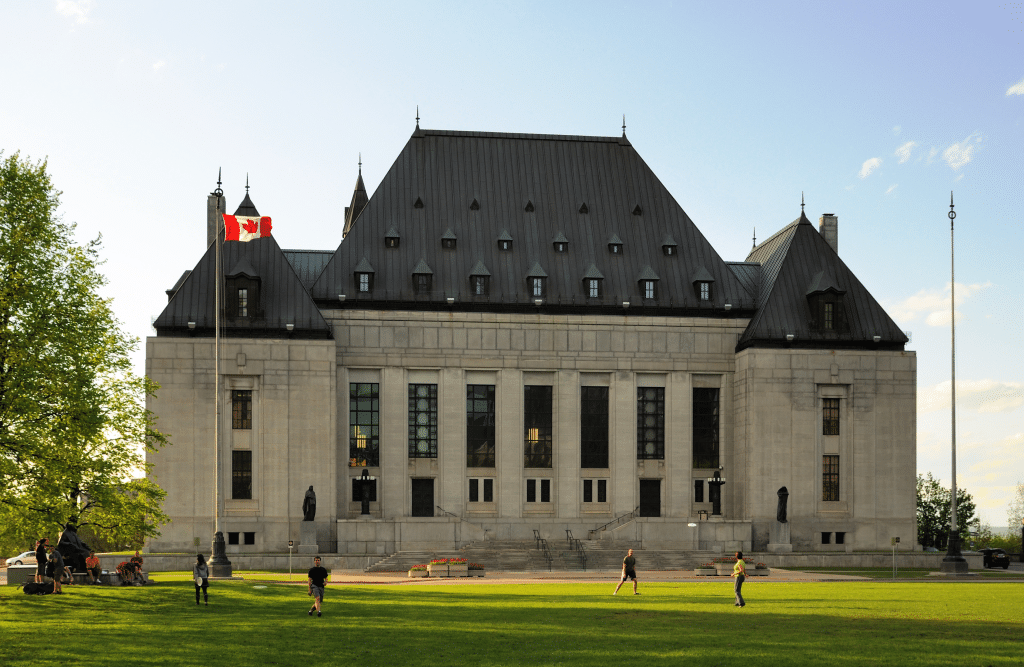
Canada’s Supreme Court on Friday upheld a law banning public employees in Quebec from wearing visible religious symbols while performing their duties. The ruling concerns Bill 21, adopted by the provincial government in 2019 with the stated aim of protecting the secular character of society.
The decision represents a political victory for Quebec’s separatist-oriented government and poses additional challenges for Canadian Prime Minister Mark Carney as he seeks to preserve national unity amid trade tensions with the United States and remarks by U.S. President Donald Trump about making Canada the 51st American state.
Details of Quebec’s Religious Symbols Ban
Quebec’s previous government passed Bill 21 in 2019, arguing that it was necessary to protect the province’s secular society. The law prohibits certain public employees, including teachers and police officers, from wearing visible religious symbols while at work.
The ban covers symbols such as the hijab, turban and kippah in a province where French speakers make up the majority of the population.
To shield the law from legal challenges, the Quebec government invoked a constitutional notwithstanding clause, a move the Supreme Court ruled was valid.
In its decision, the court stated that Bill 21 “arises from Quebec’s legitimate and historic commitment to ensuring secularism in a free and democratic society.”
However, the court found that one provision of the law violates the rights of members of Quebec’s National Assembly whose religious beliefs require them to wear head coverings.
Rights Groups Criticize Ruling and Warn of Impact on Muslim Women
The ruling drew criticism from human rights groups and organizations, which warned that the law unfairly targets Muslim women and weakens legal protections for fundamental rights.
Stephen Brown, chief executive of the National Council of Canadian Muslims, said the decision amounted to “an unlimited license for every government in this country to pass legislation stripping every Canadian of fundamental freedoms and legal rights.”
He added that the law had prompted many Muslim women to leave jobs in the education sector and had prevented some from volunteering at their children’s schools.
Meanwhile, Emmett Macfarlane, head of the political science department at the University of Waterloo, described the law as “Islamophobia embodied in state policy.”
Quebec’s Secularism Differs from the Rest of Canada
Quebec is the only Canadian province where the majority of residents speak French. It also enforces several laws that give the French language priority in public life.
Prime Minister Mark Carney has repeatedly stressed that protecting Quebec’s culture is an issue tied to Canadian sovereignty.
The provincial law reflects French traditions of state secularism, although some of its restrictions are broader in scope than those applied in France.
Patrick Taillon, a professor of constitutional law at Université Laval in Quebec City, said Quebec society displays greater distrust toward expressions of religious belief than the rest of Canada, attributing this to the province’s historical legacy of a period when religion held significant influence over political institutions.