


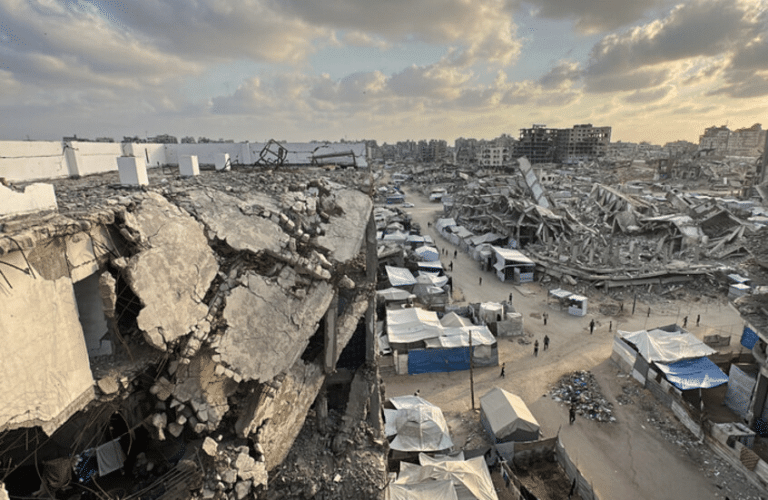
The United Nations estimates that the destruction across the Gaza Strip has generated around 61 million tons of rubble, nearly 20 times the amount of debris left by all previous conflicts in the territory since 2008.
UN estimates indicate that removing most of the rubble could take around seven years under favorable conditions. The process will require heavy machinery, fuel, safe access to affected areas, and substantial funding.
More Than One Million Tons Removed So Far
The scale of the challenge is reflected in the amount of debris that has been cleared so far. More than one million tons of rubble had been removed by September, leaving more than 60 million tons still requiring transportation, sorting, treatment, or safe disposal.
Cleanup efforts have included clearing dozens of kilometers of roads leading to schools and other vital facilities, improving movement for residents and aid workers and helping humanitarian supplies reach areas previously cut off by debris.
Cleanup teams continue to face major shortages of heavy machinery, spare parts, fuel, and specialized equipment, along with restrictions affecting the entry of essential machinery into the Gaza Strip.
Rubble Conceals Human Remains and Other Hazards
The rubble poses challenges that go far beyond engineering and reconstruction. Palestinian and UN estimates indicate that thousands of bodies and human remains may still be trapped beneath collapsed buildings.
The United Nations has reported that Palestinian Civil Defense teams recovered more than 630 bodies and human remains from beneath destroyed buildings between November 2025 and September 2026. More than 8,000 people are also estimated to remain missing beneath the rubble.
Specialized teams are working to identify locations where human remains may be present before debris is removed, allowing bodies to be recovered, documented, and identified while respecting the rights of victims’ families and the dignity of the dead.
Unexploded Ordnance and Hazardous Materials
Unexploded ordnance adds another layer of complexity to debris removal. Bombs and other remnants of war may be buried inside collapsed structures or scattered across roads, requiring risk assessments before workers and heavy equipment can enter affected areas.
Some debris also contains hazardous materials, including asbestos, industrial waste, chemicals, and heavy metals, requiring specialized procedures during sorting, transportation, and recycling.
Mine-clearance teams and specialized UN agencies are assessing areas contaminated by unexploded ordnance and identifying associated risks, although available capabilities remain limited compared with the scale of the needs.
Recycling Rubble to Support Reconstruction
UN recovery plans do not envision transporting all of the debris outside the Gaza Strip. Instead, they include sorting and crushing portions of the rubble for potential reuse during early recovery efforts.
Recycled rubble is already being used for road leveling, repairing certain routes, and preparing sites for temporary shelters, allowing some war debris to be converted into material that can support infrastructure recovery.
Environmental assessments indicate that some rubble may be contaminated with hazardous substances, making careful sorting and recycling essential to reducing health and environmental risks.
Debris Removal: The First Step Toward Reconstruction
Clearing the rubble is one of the essential prerequisites for rebuilding Gaza. Debris blocks access to neighborhoods and vital facilities, damages water and sewage networks and roads, and prevents residents from returning to some areas.
The scale of destruction means that recovery will be a long and complex process. Debris removal will not be a simple preliminary phase, but rather a massive operation requiring years of work, specialized equipment, and sustained funding.
While substantial amounts of rubble are gradually being cleared, the vast majority still needs to be removed, sorted, recycled where possible, or safely disposed of before Gaza can move more broadly into the reconstruction phase.


